Introduction
PPE procurement in industrial sites is no longer a simple “buy what we used last time” process. For manufacturing plants and warehouses, it increasingly resembles any other high-impact supply category: specifications are tighter, usage is tracked more closely, supplier performance is reviewed more formally, and continuity planning matters.
This shift is especially visible for Personal Protective Equipment Malaysia purchasing teams supporting production lines, inbound/outbound logistics, and multi-shift warehousing. EHS managers want fewer incidents and better compliance. Procurement teams want fewer emergency purchases, fewer mismatched products across sites, and clearer total cost control. Operations want PPE that workers will actually wear—comfort, sizing, and suitability for the job are now purchasing criteria, not afterthoughts.
Below is a practical, buyer-focused view of what’s changing in workplace PPE procurement for manufacturing and warehousing, and how to assess whether your current process (and supplier setup) is still fit for purpose.
1) Procurement is shifting from “items” to “standards”
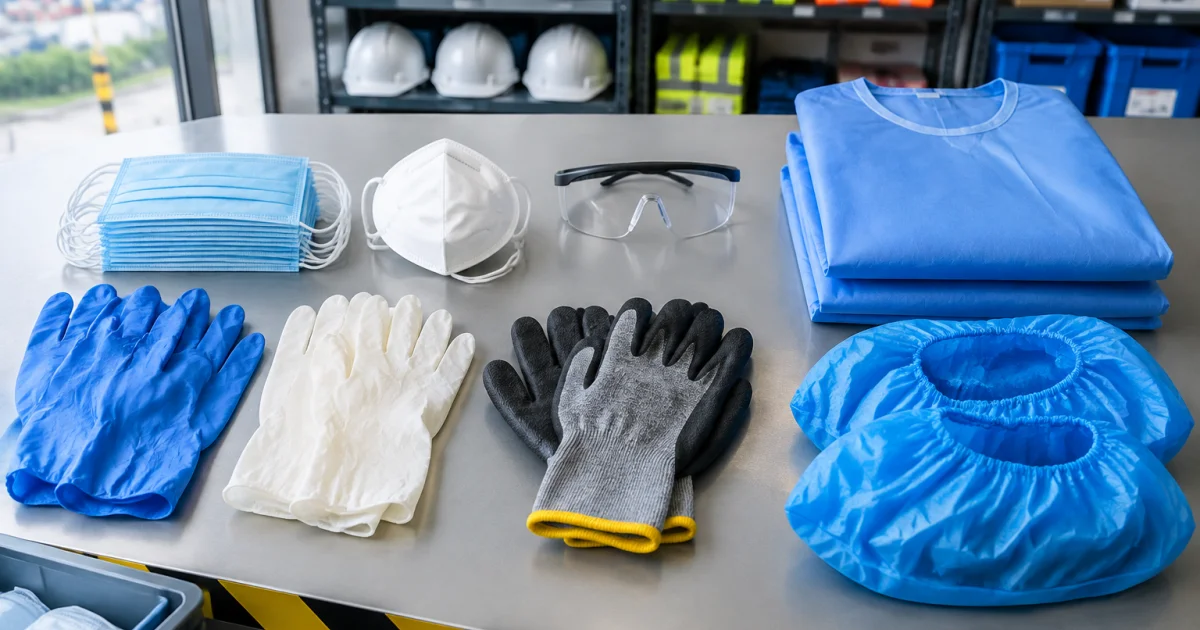
Many facilities used to order PPE as a list of familiar SKUs: masks, gloves, shoe covers, aprons, safety footwear. The procurement conversation now starts earlier—at the standard level—because inconsistent PPE creates avoidable risk and inefficiency.
Instead of asking, “Which gloves are cheapest this month?” teams are asking:
- Which tasks require which protection level? (e.g., handling cartons vs. chemical cleaning vs. dust exposure vs. wet-floor work)
- Which product attributes are mandatory? (material, thickness, cuff length, grip texture, splash resistance, breathability, closure type)
- Which sizes must be stocked? (especially for gloves, masks/respirators, and PPE clothing)
- Which approvals or documentation must be available on request? (product datasheets, declarations, batch info where relevant)
This is also where “PPE clothing” decisions are changing. For many sites, PPE Clothing Malaysia needs are being defined by application: disposable gowns or coveralls for contamination control; aprons and sleeve covers for splash zones; lab coats for controlled work areas; and clear guidance on when each is issued.
Practical procurement move: build a simple PPE matrix by work area (production, warehouse, dispatch, maintenance, hygiene/cleaning) and tie each item to a defined application. This reduces ad-hoc buying and makes supplier quoting apples-to-apples.
2) Stock control and traceability are becoming core KPIs
In manufacturing and warehousing, PPE doesn’t just “run out”—it creates downtime, last-minute purchasing, and inconsistent protection if the wrong alternatives are used. That’s why more teams are treating PPE as a controlled consumable category with basic inventory discipline.
Key changes you may already be seeing:
- Min/max levels set by department and shift patterns, not by rough estimates.
- Issue control (store issue, cabinet systems, or simple sign-out) to reduce shrinkage and misuse.
- Standard pack sizes and predictable delivery schedules to avoid emergency orders.
- Segmentation between critical PPE (must never stock out) and convenience PPE (buffer stock acceptable).
Traceability is also becoming more important in specific environments (food handling, pharma-related operations, clean areas), where buyers may want consistent batch/lot documentation or at least stable manufacturing sources. Even when full traceability isn’t required, procurement teams increasingly want confidence that what arrives is the same as what was approved.
Practical procurement move: ask suppliers to quote in a way that supports stockkeeping (consistent carton quantities, predictable lead times, and clear item naming). If your stores team struggles to distinguish similar gloves or masks, you’ll end up with “shadow standards” and wrong issuance.
3) Supplier evaluation now includes service reliability—not only unit price
Many industrial buyers still begin with price comparisons, but supplier selection increasingly considers continuity, responsiveness, and the ability to support standardisation across sites. The market language often frames this as finding the “cheapest” option, but experienced buyers know a low unit price can be costly if the supplier can’t maintain availability or consistency.
When assessing a PPE Supplier Malaysia, procurement and EHS teams are paying closer attention to:
- Consistency of supply: Can the supplier support your monthly/quarterly volume without frequent substitutions?
- Specification discipline: When a product changes, do you get advance notice and a like-for-like comparison?
- Support for trialing and user acceptance: Can they provide samples or small trial quantities for comfort/fit validation?
- Range coverage: Can they supply multiple PPE categories so you reduce vendor fragmentation?
- After-sales problem solving: How quickly do they respond to sizing issues, damaged cartons, or urgent replenishment?
This is particularly important for multi-site operations, where procurement may want one supplier to support standard PPE across facilities. A one-stop approach can reduce administrative workload and help enforce standards—if the supplier has real breadth and stable fulfilment.
Practical procurement move: define “service-level questions” in your RFQ (request for quotation) such as substitution policy, delivery cadence options, and handling of urgent top-ups. Documenting these early reduces surprises after onboarding.
4) Category consolidation is linking PPE with packaging and warehouse consumables
In many industrial operations, PPE procurement is no longer isolated. It is increasingly purchased alongside other daily consumables used on the shopfloor and in dispatch: stretch film, strapping, protective packaging, and tape. The driver is straightforward—procurement teams want fewer purchase orders, fewer deliveries, and fewer supplier relationships to manage.
This is especially common in warehousing and logistics environments where the same teams manage both safety consumables and packing/dispatch materials. A typical “daily essentials” basket may include:
- Gloves for handling cartons and preventing minor injuries.
- Masks for dusty zones or hygiene-oriented areas.
- Shoe covers or dedicated footwear rules for clean or sensitive areas.
- Rubber boots or safety footwear for wet floors, washdown areas, or outdoor handling.
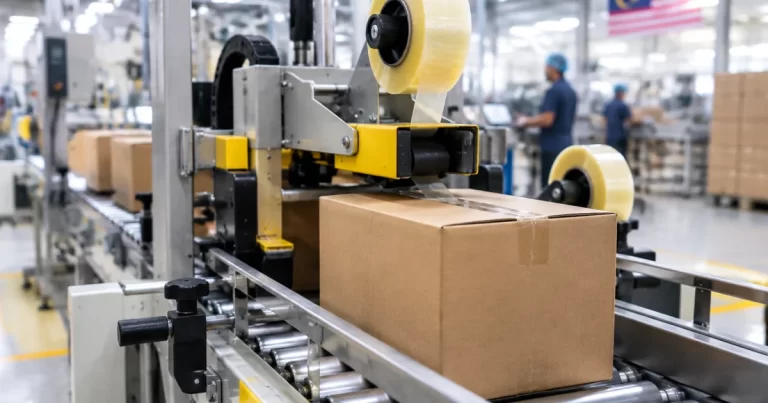
- Adhesive tape (e.g., OPP tape) for carton sealing, bundling, and dispatch.
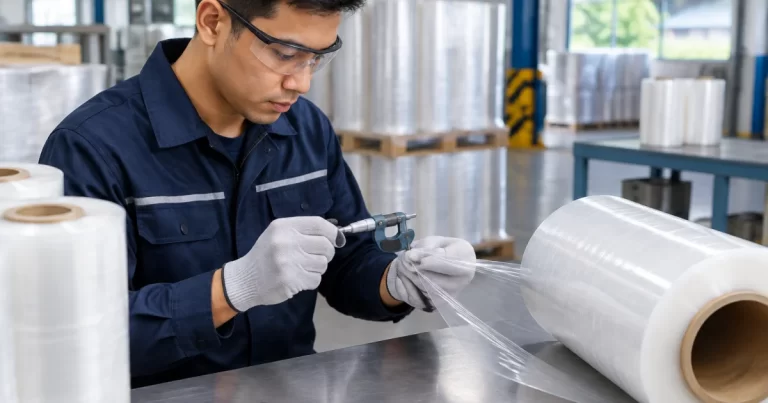
- Stretch film (including coreless stretch film options) to stabilise pallet loads and reduce transit damage.
- Strapping (PP, PET, or metal strapping where appropriate) for heavier loads and high-tension securing.
While tape, stretch film, and strapping are not PPE, their procurement links to the same risk outcomes: load stability, damage prevention, and safer handling. Poor packaging choices increase breakage, sharp edges, rework, and rushed manual handling—conditions where PPE consumption tends to spike.
Practical procurement move: if you’re consolidating suppliers, evaluate whether the supplier can competently support both safety and packaging workflows. For packaging, you may find it useful to review guidance like how packaging quality affects product protection during transportation, because damage prevention and safer handling go hand in hand.
Where “tape” becomes a procurement quality issue
Carton sealing tape is a small line item with outsized operational impact. If adhesive performance is inconsistent, cartons open, returns rise, and teams compensate with over-taping—raising consumption and slowing packing lines. For buyers who want to standardise packing performance, it can be helpful to source from a dedicated category like adhesive tape where specifications can be aligned to carton type, storage conditions, and handling intensity.
5) Fit, comfort, and user acceptance are now procurement requirements
Manufacturing and warehousing teams operate under heat, humidity, fast-paced picking, repetitive movement, and long shifts. PPE that “meets the requirement” on paper can still fail in practice if workers find it uncomfortable or poorly fitting. That’s why procurement is increasingly collaborating with EHS and operations on user acceptance criteria.
Examples of acceptance-driven requirements include:
- Glove dexterity and grip for scanning, taping, strapping, or handling stretch film rolls.
- Breathability and fogging concerns for masks used alongside eyewear.
- Correct sizing range to prevent workers from “making do” with the wrong size.
- Durability vs. disposability decisions aligned to the task (avoiding false economies).
- Footwear suitability such as rubber boots for wet zones or steel toe cap options for impact risk areas.
User acceptance also reduces hidden costs: fewer replacements, fewer work interruptions, and better compliance with site rules. This is one of the biggest reasons buyers are formalising trials and feedback loops before rolling out a new standard.
Practical procurement move: run a structured two-week trial with a small group (pickers, packers, maintenance, cleaners). Collect feedback on comfort, slip/grip, heat, tearing, and sizing. Then lock the spec and only allow substitutions through a documented approval process.
How to update your PPE procurement process without overcomplicating it
The goal is not to create a heavy bureaucracy. It’s to make purchasing predictable, auditable, and aligned to real shopfloor conditions. A simple approach many teams use is to standardise the “inputs” procurement controls, then measure a few outcomes.
Here is a practical checklist you can adapt:
- Define standards: a PPE matrix by area/task with approved alternatives.
- Write specifications: minimum attributes for each PPE category (including PPE clothing), plus packaging/label clarity to avoid store confusion.
- Set stock rules: min/max, reorder points, and who can request urgent replenishment.
- Supplier onboarding: substitution policy, sample support, delivery cadence, and communication expectations.
- Quarterly review: top stockouts, top over-consumption items, and recurring user complaints.
If you need a deeper foundation on selection principles, you can also refer to related reading such as how to select the right personal protective equipment in Malaysia and common mistakes to avoid when buying PPE. These can help align procurement discussions with risk-based selection rather than brand familiarity alone.
Conclusion: the “new normal” is controlled, standardised PPE buying
What’s changing in PPE procurement for manufacturing and warehousing is not a single product trend—it’s a process change. Buyers are standardising PPE by task, controlling inventory more tightly, and evaluating suppliers on reliability and consistency, not just on unit cost.
For EHS and procurement teams, the next step is to translate those expectations into practical documents: a PPE matrix, clearer specifications, and supplier performance checks that prevent stockouts and reduce substitutions. Done well, this approach improves compliance, reduces operational disruption, and makes budgeting and forecasting far more predictable.
If your PPE purchasing still relies on last-minute orders, changing brands, or unclear issuance rules, now is a good time to reset the basics—then work with a supplier who can support stable supply across both safety and day-to-day industrial consumables.
Frequently Asked Questions
What should I evaluate besides price when choosing a PPE supplier for a factory or warehouse?
Beyond unit price, evaluate supply consistency (ability to fulfil your recurring volume), substitution policy (how changes are handled), documentation (datasheets and clear item naming), trial/sample support for user acceptance, delivery cadence options, and responsiveness to urgent replenishment or quality issues.
How can we reduce PPE stockouts without holding too much inventory?
Start with min/max levels by department and shift pattern, set clear reorder points, and standardise pack sizes so stores can forecast usage. Separate critical PPE (must never stock out) from lower-risk items, and agree on a fixed replenishment schedule with your supplier to reduce emergency purchases.
What is included under PPE clothing for industrial procurement in Malaysia?
PPE clothing typically includes items such as disposable gowns or coveralls, aprons, sleeve covers, lab coats, and related protective wear used to reduce exposure to contaminants, splashes, dust, or hygiene risks. The right selection depends on task and work area, so buyers often define it through a PPE matrix and minimum specifications.
We keep getting “equivalent” substitutions. How should procurement control this?
Document your minimum specification (material, thickness, sizing range, closure type, and intended application), then require advance notice and approval for any substitution. Where possible, pre-approve one or two alternates after a short trial, so operations are not forced into unknown replacements during urgent replenishment.
Is it realistic to consolidate PPE and packaging consumables with one supplier?
It can be realistic if the supplier has genuine breadth and stable fulfilment. Many warehouses and manufacturing sites prefer fewer vendors for gloves, masks, shoe covers, tape, stretch film, and strapping. The key is to confirm that standards can be maintained across categories and that delivery reliability supports both safety and dispatch operations.
Ready to standardise PPE procurement across your site?
AM Packaging supports manufacturing and warehousing teams with dependable PPE and workplace consumables—so you can reduce substitutions, prevent stockouts, and keep standards consistent across departments. If you’re reviewing suppliers or tightening specifications for gloves, masks, PPE clothing, shoe covers, rubber boots, tape, stretch film, or strapping, we can help you build a practical supply list that fits daily operations.
Disclaimer Statement
We hope you found this article informative. Our content is intended for general informational purposes only and does not constitute advice or necessarily reflect the full range of services offered by AM PACKAGING SDN BHD
Readers are advised to consult with a qualified industry professional and contact our experts for recommendations specific to their individual project needs. While we strive for accuracy and completeness in our blog posts, we cannot guarantee they are error-free. AM PACKAGING SDN BHD assumes no responsibility for any errors or omissions.