Introduction
For PPE procurement, an isolation gown is a practical control measure between workers and contamination risks—whether in factories, food processing, labs, clinics, or clean packing zones. The difficulty is that “non-woven isolation gown” can vary widely by fabric type, GSM, coating/lamination, seam construction, sizing, and how consistently the supplier controls quality.
This guide provides a procurement-focused way to evaluate Non Woven Isolation Gown Malaysia suppliers: what to define before requesting quotes, how to compare material and construction specs, which documentation to request for audits, and how to run sampling and incoming inspection so the product you approve is the product you keep receiving.
Step 1: Define your use-case before you compare suppliers
Start by documenting what the gown must do in your environment. This avoids over-specifying (overpaying) or under-specifying (tears, wet-through, discomfort, poor coverage).
- Where will it be used? Dry floor, wet washdown, lab bench work, clinic, food handling zone, visitor use.
- What exposure do you expect? Light splash, heavy fluids, powders/dust, or mainly contact contamination control.
- Wear time and frequency? Short tasks vs. full shifts; frequent donning/doffing.
- Donning/doffing practice? Back-tie vs. Velcro; thumb loops/knit cuffs; disposal method.
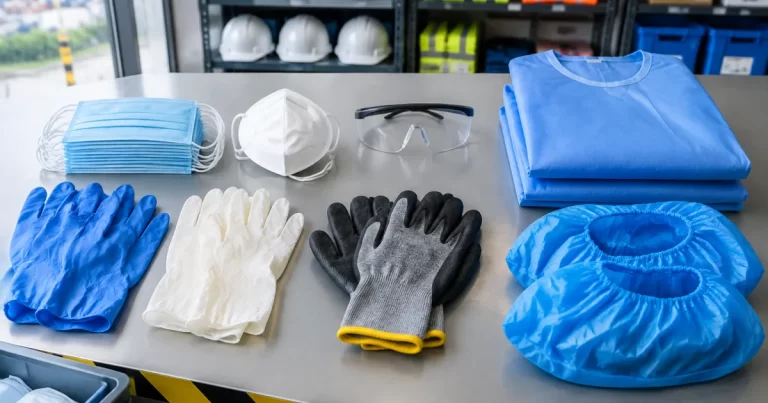
- What other PPE must integrate? Gloves, shoe covers/boots, masks, hairnets, sleeve covers—fit and overlap matter.
- Movement stress? Reaching, lifting, bending increases seam and pattern demands.
Example: Food packing often prioritizes lint control, coverage, and comfort; wet washdown areas may need laminated material, stronger seam choices, and secure cuffs even if it runs warmer.
Create a short must-have list and nice-to-have list and send the same requirements to every supplier to make quotes comparable.
Step 2: Understand non-woven materials and what to request on a spec sheet
Avoid vague descriptions like “non-woven gown, blue.” Request a spec sheet covering fabric type, GSM, coating/lamination, and garment construction details.
2.1 Fabric type: SMS, PP spunbond, and laminated options
- PP spunbond (polypropylene): Lightweight and breathable; barrier depends on weight/finish.
- SMS (Spunbond–Meltblown–Spunbond): Typically better barrier/filtration than basic spunbond with reasonable breathability.
- Film-laminated non-woven: Higher fluid resistance; usually less breathable and warmer.
If splashes are part of the job, confirm whether the gown is laminated and whether reinforcement is full-body or only critical zones. If the area is mainly dry, prioritize breathability to reduce heat stress and improve compliance.
2.2 GSM (fabric weight): what it means and how to use it
GSM (grams per square meter) indicates fabric weight. Higher GSM often improves opacity and tear resistance but can reduce breathability and increase cost. GSM is not a full barrier guarantee—structure and coatings matter—but it is essential for comparing like-for-like.
- Request body fabric GSM and any reinforcement panel GSM.
- Confirm composition (e.g., 100% PP), color, and any antistatic treatment if relevant.
Tip: Put fabric type and GSM in the RFQ/PO line item name (e.g., “SMS isolation gown, XX GSM, knit cuff, back tie”) to reduce misquoting.
2.3 Key garment spec items that should be written, not assumed
- Size range and dimensions: chest width, gown length, sleeve length (avoid “universal” assumptions).
- Cuff type: elastic, knit, or thumb loop (knit can improve glove overlap).
- Closure type: waist/neck ties, Velcro, snaps, or combinations.
- Collar/neck design: round neck, tie-back, stand collar.
- Seam type and any reinforcement.
- Sterility status: sterile vs. non-sterile (do not assume).
- Packaging configuration: pcs/bag, bags/carton; individual packing if required.
Make sure these appear on the quotation and packing list so receiving can verify deliveries against the approved spec.
Step 3: Compare seam type and construction (this is where many gowns fail)
Seams are common failure points. Shoulder and arm seams take the most stress during reaching, lifting, and bending. If a seam splits, protection drops immediately—even if the fabric is adequate.
3.1 Common seam constructions and what to ask
- Overlock stitched seam: Economical; strength depends on stitch density/thread; not fluid-sealed.
- Bound (tape-bound) seam: Added strength and cleaner edges; may improve comfort.
- Ultrasonic welded seam: No needle holes; often cleaner and can improve barrier at seams.
- Sealed/taped seam: Sealing tape reduces fluid ingress; used for higher barrier needs.
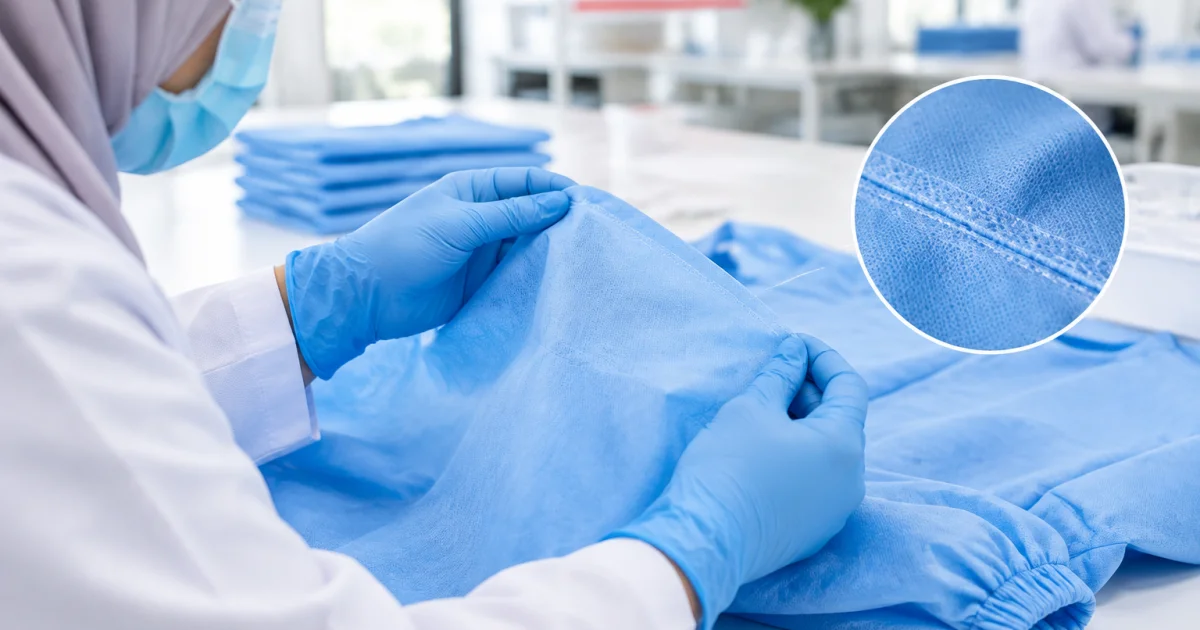
Because seam terminology varies, request clear seam photos and a physical sample for inspection.
3.2 Simple seam checks you can do on a sample (no lab needed)
- Controlled pull test: Apply steady tension at shoulder/arm seams; look for thread breakage, tearing near stitch holes, or film delamination.
- Needle-hole check: For stitched seams, inspect visible holes; if splash resistance matters, discuss welded or taped seams.
- Movement coverage check: Have a wearer raise arms and bend; check sleeve ride-up and back exposure (often sizing/pattern related).
- Comfort check: Neck and underarm seams can irritate during long wear and reduce compliance.
Example: In packing operations, repetitive reaching can expose weak shoulder seams. Upgrading seam construction may cost less than frequent gown changes, contamination incidents, or downtime.
Step 4: Verify barrier and performance requirements with appropriate evidence
Match gown performance to your hazards and verify supplier claims with evidence that aligns with your operational and audit needs.
4.1 Decide which performance attributes matter most
- Tear resistance (especially sleeves and ties)
- Seam strength
- Fluid repellency / penetration resistance (when splashes are expected)
- Linting / particle shedding (clean packing, food handling, sensitive products)
- Breathability and heat comfort (shift wear)
Ask what tests are available for both material and finished garment. If a supplier cannot explain how they verify consistency, treat it as a risk signal.
4.2 Ask for consistency controls, not just a one-time certificate
For repeat orders, consistency matters as much as initial performance. Ask the supplier to describe their QC in plain terms:
- Incoming fabric checks (e.g., GSM verification, visual inspection)
- In-process checks (stitching/welding settings, defect sorting)
- Final checks (dimensions, closures, labeling, carton counts)
- Batch identification and traceability (lot numbers, production date ranges)
You are approving an ongoing supply stream, not just a one-off sample.
Step 5: Run compliance and documentation checks (audit-friendly procurement)
Compliance for procurement usually means the product suits the intended task and your decision is defensible during audits. Since requirements vary by site and industry, prioritize documentation that proves product identity and traceability.
5.1 Document checklist to request from suppliers
- Product specification sheet: fabric type, GSM, cuff/closure, seam type, sizes/dimensions, color, packaging.
- Material composition declaration and any coating/lamination details.
- Batch/lot identification method: carton marking and how deliveries trace back to production lots.
- Country of origin (for internal records and import documentation if applicable).
- Relevant test reports supporting key claims (barrier, tear, seam strength, linting as applicable).
If you also need related PPE (hairnets, beard masks, shoe covers, sleeve covers), confirm the supplier can supply those consistently to reduce variability and stockout risk.
5.2 Red flags during compliance discussions
- Only a generic brochure; missing GSM, seam type, or dimensions.
- Cannot confirm whether material is PP spunbond, SMS, or laminated.
- “Same as sample” with no lot control explanation.
- Quotation includes broad substitution language (“subject to availability, equivalent brand”).
These issues can be managed by tightening your purchase specification and requiring written approval for any change.
Step 6: Evaluate supplier capability: availability, lead time, and service support
Even a technically suitable gown becomes a risk if supply is inconsistent. In Malaysia, predictable lead time and clear communication are key operational requirements.
6.1 Questions to ask every PPE supplier
- Stockholding: Do you keep local stock for common sizes/colors?
- Lead time: Typical repeat-order lead time; what changes it (color, cuff, seam, volume)?
- MOQ and carton configuration: Can you scale without excessive MOQs?
- Backorder policy: Split deliveries, prioritization rules, communication process.
- Defect/claim handling: What evidence is needed (photos, lot number, sample) and response time?
- Change control: Will you be notified before any fabric/seam/size changes ship?
For BOFU decisions, compile a simple comparison table (A vs B vs C) covering fabric/GSM, seam, cuffs/closures, documentation, lead time, and trial results.
6.2 One-stop supply advantage (when it matters)
Some sites prefer consolidating suppliers for PPE and other consumables (e.g., stretch film, strapping, adhesive tape) to reduce admin workload and deliveries. If you consolidate, ensure PPE specifications and QC controls are clearly defined and not diluted by general trading practices.
Step 7: Sampling, trial, and incoming inspection—make your decision repeatable
A repeatable selection process reduces “silent drift” where delivered quality changes over time. Define how you trial, what you record, and how you verify ongoing deliveries.
7.1 Request the right samples
- Samples must match the quoted specification (size, cuff type, seam type).
- Request at least two sizes if your workforce varies.
- Request multiple pieces from the same lot to assess consistency.
- Request packaging examples (how it arrives and stores).
7.2 Run a short wear trial with a checklist
Trial for 1–3 shifts as appropriate. Use a checklist that covers:
- Fit/coverage: back coverage when bending, sleeve length with gloves, cuff tightness.
- Durability: seam integrity, tie strength, tearing near armholes.
- Comfort: heat, sweating, irritation at neck/wrists.
- Usability: easy don/doff, closures snagging, compatibility with other PPE.
- Hygiene handling: shedding, dust pickup, tearing during removal.
Example: Clinics/labs may prioritize quick donning and secure closures; packing areas may prioritize durability and movement. Use consistent scoring across user groups so procurement decisions are evidence-based.
7.3 Set up a basic incoming inspection for every delivery
- Verify carton labels and quantities match the PO (product name, size, color, pack count).
- Randomly sample pieces to confirm cuff/closure, seam appearance, and approximate dimensions.
- Check for defects: holes, incomplete stitching/welding, torn ties, inconsistent color, contaminated packaging.
- Record lot/batch identifiers to support traceability.
Quarantine suspect batches and contact the supplier promptly with photos, lot/PO details, and a clear description of the issue.
Step 8: Build a purchase specification that prevents substitutions
Lock the approved specification into your purchasing documents to reduce substitution risk during shortages or supplier changes.
8.1 What to include in your PO description
- Material type (PP spunbond / SMS / laminated) and GSM
- Color
- Size and key dimensions (where possible)
- Cuff type (elastic/knit/thumb loop)
- Closure type (ties, Velcro, snaps)
- Seam type (overlock/bound/ultrasonic/sealed) and reinforcement details
- Packaging configuration (pcs/bag, bags/carton)
- “No substitution without written approval” (if aligned with your policy)
Clear PO wording protects you when a supplier proposes an “equivalent” product that may not match your risk profile.
8.2 Keep one approved reference sample
Store a clean, approved reference sample with your procurement file. Receiving can quickly compare seams, cuffs, and overall feel against this control to catch changes early.
Conclusion: choose the supplier who can prove consistency, not just quote a product
Choosing a non-woven isolation gown supplier in Malaysia is best handled as a structured procurement process: define your use-case, compare fabric type and GSM, assess seam construction, request audit-friendly documentation, and validate performance through sampling, a short wear trial, and routine incoming inspection. The outcome you want is a reliable supply of a consistent specification that fits your hazards and your workforce—not just a one-time acceptable sample.
Useful next reads and product references
- Non Woven Isolation Gown (product details and options)
- Cpe Isolation Gown (alternative gown type for specific use-cases)
- Non Woven Hairnet (supporting hygiene PPE for clean areas)
- Non Woven Beard Mask (for food handling and contamination control)
- Korakoh Safety Series (rubber boots for wet industrial areas)
Frequently Asked Questions
What should I ask a Non Woven Isolation Gown Malaysia supplier before placing a bulk order?
Ask for a full spec sheet (fabric type and GSM, cuff and closure type, seam type, sizing/dimensions, packaging), photos of seam construction, sample pieces from the same grade being quoted, and how they manage lot/batch traceability. Also confirm lead time for repeat orders and whether substitutions can happen without your written approval.
Which seam type is best for non-woven isolation gowns?
It depends on your risk level. Stitched (overlock) seams are common and economical but are not inherently fluid-sealed. Bound seams can add strength and comfort. Ultrasonic welded seams can reduce needle holes, and taped/sealed seams are typically used when higher fluid resistance at seam lines is needed. Always verify with a physical sample and a short wear trial.
Is higher GSM always better for isolation gowns?
Not always. Higher GSM can improve opacity and tear resistance, but it may reduce breathability and increase heat discomfort, which can lower user compliance. Barrier performance also depends on fabric structure (e.g., SMS) and whether it is laminated. Choose GSM and material based on your environment (dry vs splash exposure) and wear duration.
How can we check gown quality on delivery without laboratory testing?
Use incoming inspection: verify carton labeling and quantities against the PO, sample a few pieces to confirm size, cuff type, closure type, and seam appearance, and check for visible defects (holes, incomplete seams, torn ties, dirty packaging). Record any lot/batch identifiers and quarantine suspect cartons until the supplier confirms corrective action.
Should we buy isolation gowns from a one-stop PPE Supplier Malaysia or a specialist?
A one-stop supplier can simplify procurement and reduce stockout risk for related PPE clothing items (hairnets, beard masks, shoe covers) and other consumables. The key is ensuring the supplier can consistently deliver the exact gown specification you approved, with clear documentation, samples, and change-control communication—regardless of whether they also supply other products.
Source reliable isolation gowns with AM Packaging
If you are evaluating suppliers for non-woven isolation gowns, AM Packaging can help you compare options by fabric type, GSM, cuff and closure style, seam construction, and packaging configuration—so your PO specification matches what arrives on site.
As a one-stop industrial supplier, AM Packaging also supports related PPE and consumables to keep day-to-day operations running consistently, from hygiene items to packaging essentials such as stretch film, strapping, and adhesive tape.
Disclaimer Statement
We hope you found this article informative. Our content is intended for general informational purposes only and does not constitute advice or necessarily reflect the full range of services offered by AM PACKAGING SDN BHD
Readers are advised to consult with a qualified industry professional and contact our experts for recommendations specific to their individual project needs. While we strive for accuracy and completeness in our blog posts, we cannot guarantee they are error-free. AM PACKAGING SDN BHD assumes no responsibility for any errors or omissions.