Introduction
PPE clothing is easy to buy but hard to specify. A “gown” or “coverall” may sound interchangeable, yet the right choice depends on the work area, what can splash or shed, whether you’re protecting people, product, or both, and how quickly teams must change.
A practical way to standardise decisions is a work-area risk approach: define zones and the tasks inside them, then match garment type, material, coverage, and change frequency to the exposure. Done well, you reduce cross-contamination, avoid overprotecting (and overheating) staff, and stop paying for features that don’t improve outcomes.
If you’re evaluating a PPE Supplier Malaysia partner, use this guide to turn your risk assessment into purchase-ready specifications for gowns, coveralls, aprons, and sleeve covers—plus the details that prevent supply and compliance issues.
1) Start with a simple work-area risk map (zones + tasks)
Start with where garments are worn, not a catalogue. Most sites can classify areas into four categories:
- Low-risk / general: packing tables, dry stores, admin walk-throughs, visitor routes.
- Hygiene-controlled: food processing, clean packing, change rooms, controlled entry lines.
- Splash / wet process: wash-down, chemical dosing, sanitation, mixing, rinsing.
- High exposure / high consequence: labs, QA testing, pharmaceutical handling, high-dust maintenance, frequent contact hazards.
Then list tasks inside each zone. One room can shift risk by activity (e.g., normal operation vs cleaning/chemical handling).
For each zone-task, document exposure in plain language:
- Contact type: dry particulate, liquid splash, aerosol, oils/grease, light abrasion, sharp edges.
- Direction of risk: protect worker, protect product, or both.
- Coverage needed: torso/arms/full body; hood/head needs; boot/ankle interface.
- Duration & heat load: short entry vs extended wear; ventilation; frequency of doffing.
- Contamination control: lint/shedding risk and transfer between zones.
This makes comparisons under Personal Protective Equipment Malaysia programs clearer because you separate “where and why” from “what we usually buy”.
2) Choose the right garment type: gown vs coverall vs apron vs sleeves
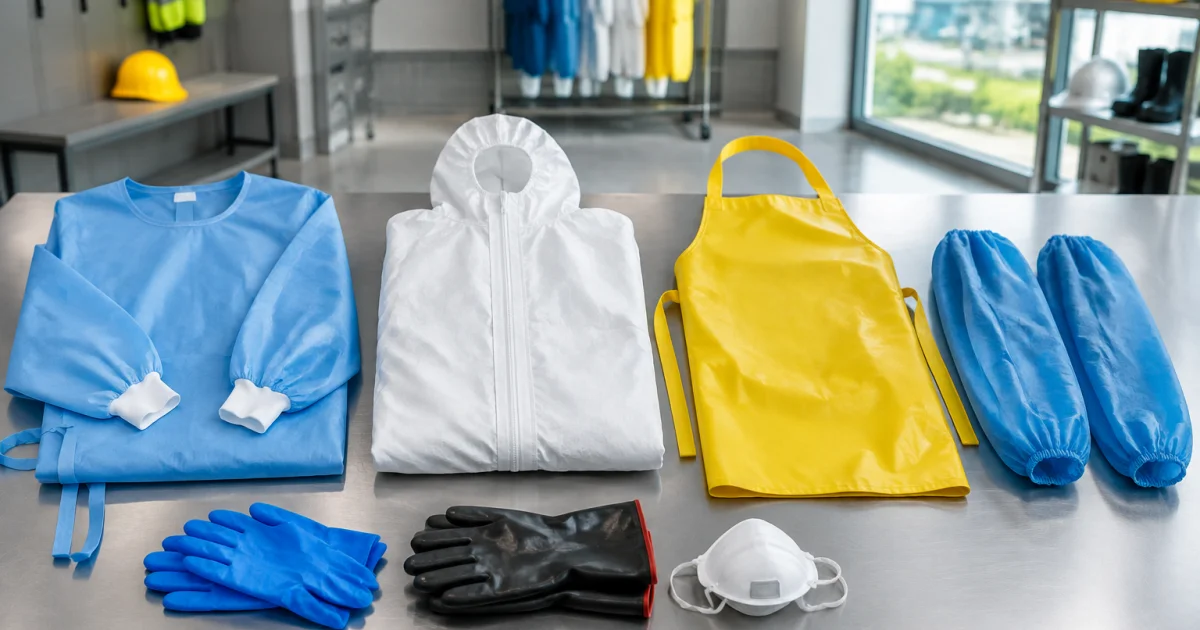
Each garment balances coverage, change speed, and contamination control differently.
Gowns: fast change for hygiene and controlled access
Gowns suit hygiene-controlled entry and light splash where you need quick donning and consistent front/arm coverage—especially for visitors or operators moving between zones.
Document:
- Back closure style (ties, overlap) for coverage during movement.
- Cuff type (elastic/knit) for glove interface and wrist gap control.
- Length & size range to avoid ride-up and exposed clothing.
- Material weight for breathability and comfort.
If the use case is hygiene/isolation, state whether non-woven, low-lint behaviour, or liquid resistance is required. For buyers searching Non Woven Isolation Gown Malaysia, clarify if the gown is for product hygiene control, visitor use, or wet sanitation—because that drives material/coating needs.
Coveralls: full-body barrier for higher exposure and transfer control
Coveralls fit tasks where dust/aerosols or transfer between areas is a concern, and where bending, climbing, or overhead reach can open gaps in two-piece solutions.
Specify:
- Hooded vs non-hooded for hair containment and overhead exposure.
- Elastic points at wrists/ankles/waist to reduce ingress and snagging.
- Zipper flap when front sealing is needed for dust/splash control.
- Seam construction (standard vs reinforced) based on abrasion/tear risk.
Because coveralls can increase heat stress and slow change time, consider whether frequent short entries are better handled by gowns plus sleeve covers (with controlled glove changes) instead of full coveralls for everyone.
Aprons: targeted splash protection and easy replacement
Aprons are best when the main hazard is front-of-body wetting—washdown, sanitation, food prep, mixing, or oily maintenance. As an overlay on a gown or coverall, they protect the base garment and can reduce overall consumption.
Document:
- Apron length/width (knee vs shin; side wrap).
- Neck/waist design for quick removal and secure fit.
- Material thickness matched to splash intensity and tear risk.
Sleeve covers: close gaps at the highest-contact area
Forearms frequently contact equipment, benches, cartons, and product-contact surfaces. Sleeve covers help control contact contamination, protect repetitive-handling areas, and reduce full garment changes when only arms are exposed to wet/dirty tasks.
Key points:
- Elastic at both ends to prevent sliding and reduce wrist gaps.
- Length selection for reach and glove overlap.
- Material choice for dry handling vs splash exposure.
3) Material and performance: what to write into your purchase spec
Specs fail when they rely on vague labels (“non-woven”, “waterproof”, “heavy duty”). Instead, define performance needs in operational terms, then let suppliers propose materials that meet them.
Define the hazard profile clearly
- Dry particulate / lint control: prioritise low-lint for clean packing and labs.
- Light splash: require liquid resistance and secure cuff interfaces.
- Frequent wet contact: call for stronger liquid barrier and consider apron overlays.
- Oils/grease: state tolerance for staining and whether handling/grip is affected.
Fit, movement, and doffing safety (often overlooked)
Barrier performance also depends on whether staff can work and remove garments safely without spreading contaminants. Add requirements such as:
- Easy donning/doffing with gloves on.
- Reduced tearing during removal for fast changeovers.
- Size availability that fits your workforce (avoid tight shoulders/crotch in coveralls and exposed legs in gowns).
Comfort and heat management
In Malaysia, breathability can make or break compliance. If a zone is not truly high exposure, choose garments tolerable for the intended duration so protection stays consistent.
A practical spec method: define maximum expected wear time per task and whether airflow is limited (enclosed rooms, near ovens, humid wash areas). Use this to assess garment weight and ventilation features during trials.
4) Zone-based examples: matching garments to common facility areas
Use these examples to validate your risk map and write line items that match real work patterns.
Hygiene-controlled production or clean packing
- Primary goal: protect product from people (hair, fibres, clothing contact).
- Typical spec: non-woven gown with secure cuffs; add sleeve covers at high-contact stations; use gloves/mask per your hygiene plan.
- Change triggers: after breaks, visible soiling, zone exit, or task change (e.g., packing to cleaning).
Where carton handling is heavy, sleeve covers can reduce transfer to packaging surfaces, supporting cleaner outer cartons and more consistent sealing when surfaces stay less contaminated.
Wet sanitation / wash-down areas
- Primary goal: protect worker from splash and keep underlayers dry.
- Typical spec: apron over a gown or coverall; sleeve covers if forearm wetting is frequent; ensure cuff-to-glove overlap works when wet.
- Change triggers: after heavy wetting, chemical exposure events, or compromised barrier performance.
Laboratory, QA, and sampling points
- Primary goal: reduce cross-contamination and protect from incidental splashes.
- Typical spec: gown or coverall based on movement between production and lab; prioritise low-lint and wrist fit.
- Documentation: state if garments are single-use within the lab only or used across rooms.
Maintenance and engineering tasks
- Primary goal: task protection (dust, grime, oils) and reduce transfer back into production.
- Typical spec: coverall for dusty/overhead work; apron for oily or splash-prone tasks; sleeve covers when full coveralls are unnecessary.
Also define foot protection expectations for wet/oily floors and how footwear interfaces with coverall ankles (elastic fit, taping policy if used, and change/clean rules).
5) Procurement checklist: how to buy PPE clothing with fewer surprises
Once zone-task decisions are set, convert them into consistent line items suppliers can quote accurately.
Write specs that are comparable
- Garment type: gown/coverall/apron/sleeve cover.
- Material description: non-woven, PE, laminated, etc. (as required by the hazard).
- Key design details: hood yes/no, cuff type, closure type, length, elastic points.
- Use environment: dry/hygiene-controlled/wet sanitation/lab.
- Change frequency assumptions: per shift/per entry/per task to support consumption planning.
Evaluate suppliers as a program partner, not just a unit price
For BOFU decisions, assess the supplier’s ability to run the program reliably:
- Supply consistency for recurring consumables.
- Scalable volumes for routine orders and surge needs.
- Interface compatibility across items (cuffs to gloves, sleeve length to overlap, etc.).
- Customisation support for sizing, packaging, or operational preferences when needed.
Some organisations consolidate sourcing across workplace consumables. Beyond PPE clothing, a one-stop supplier may reduce admin overhead for essentials used around dispatch and warehousing—such as adhesive tape for carton sealing or gloves that match cuff styles. Consolidation only helps when it improves availability and consistency, so keep specs and approvals clear.
Plan storage, issuance, and disposal
Even good specs fail without controls. Add operational notes to SOPs:
- Point-of-use locations (PPE stations at zone entry, sanitation rooms, lab doors).
- Size sorting to reduce waste and tearing from poor fit.
- Waste streams: general vs contaminated waste based on your risk assessment.
- Training cues: simple don/doff guidance and glove-sleeve overlap reminders.
Conclusion: specify by work area risk for safer, simpler purchasing
Specifying PPE clothing by zone and task turns separate purchases into a coherent protection system: gowns for fast hygiene control, coveralls for full-body exposure and transfer prevention, aprons for concentrated splash risks, and sleeve covers to close common contact gaps.
For procurement, clarity is the main advantage—suppliers quote consistently, trials can compare equivalents without changing safety intent, and consumption becomes more predictable. When shortlisting a PPE Supplier Malaysia partner, ask them to review your zone-task map and propose a standard garment set with clear use rules per area.
Useful next reads
Frequently Asked Questions
How do I choose between a gown and a coverall for a hygiene-controlled area?
Use a gown when the main goal is hygiene control with fast changeovers and you can manage gaps using proper cuffs, gloves, and (if needed) sleeve covers. Choose a coverall when you need full-body coverage to reduce transfer between areas, when staff bend/reach frequently, or when dust/aerosol exposure makes partial coverage unreliable.
What should I specify when buying Non Woven Isolation Gown Malaysia products for industrial use?
Specify the intended zone and task first (visitor entry, clean packing, lab, or wet sanitation). Then define closure style, cuff type, sizing/length, and whether low-lint behaviour or liquid resistance is required. These details affect real performance more than a generic “non-woven” label.
Do sleeve covers replace gowns or coveralls?
Sleeve covers are usually an add-on rather than a full replacement. They are most effective when your risk is concentrated on forearms (handling, wipe-down, contact with equipment) and you want to reduce full garment changes. For full-body exposure or high transfer risk, gowns or coveralls are still needed.
How can procurement compare quotes from different PPE clothing suppliers fairly?
Create a zone-task specification sheet that lists garment type, material expectations, key design details (cuffs, closures, hood, elastic points), sizing range, and change frequency assumptions. Ask suppliers to quote against that sheet and provide sample units for a short wear and don/doff trial with operators.
Can I consolidate PPE clothing with other consumables like gloves and tape from one supplier?
Yes, if it improves availability and compatibility. Consolidation works best when gloves match gown/coverall cuffs, PPE stations can be replenished consistently, and your packaging workflow stays reliable. Many sites source PPE clothing, gloves, and related supplies such as adhesive tape through one vendor to simplify ordering—while still keeping technical specs and approvals in place.
Standardise PPE clothing by zone with AM Packaging
If you want a clearer way to purchase PPE clothing for production, labs, hygiene zones, and maintenance, AM Packaging can help you match gowns, coveralls, aprons, sleeve covers, gloves, and related workplace consumables to your work-area risk. Share your zones and tasks, and we’ll recommend practical options that support consistent daily supply and smoother procurement.
Disclaimer Statement
We hope you found this article informative. Our content is intended for general informational purposes only and does not constitute advice or necessarily reflect the full range of services offered by AM PACKAGING SDN BHD
Readers are advised to consult with a qualified industry professional and contact our experts for recommendations specific to their individual project needs. While we strive for accuracy and completeness in our blog posts, we cannot guarantee they are error-free. AM PACKAGING SDN BHD assumes no responsibility for any errors or omissions.