
Introduction
Wet walkways, oily production areas, and washdown floors are common in factories, food plants, and warehouses. Many slip incidents start with ordinary actions—turning with a load, clearing a jam, moving a pallet jack over a damp threshold. The right safety boot lowers risk by improving grip, protecting against impacts and splashes, and staying wearable for long shifts.
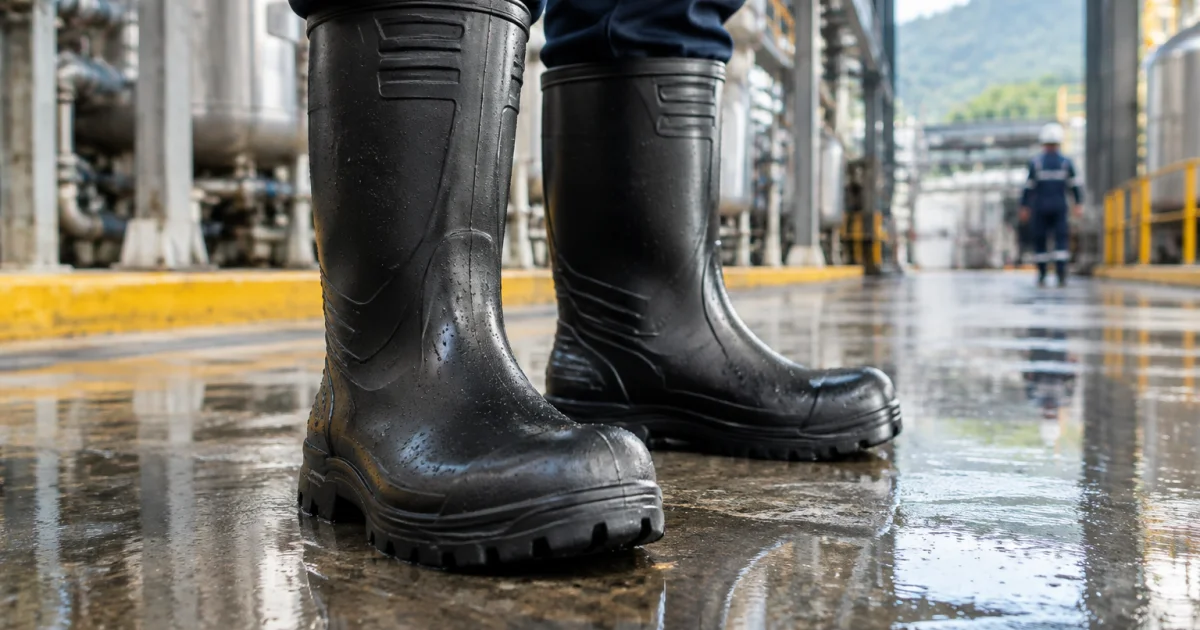
This beginner guide explains how to select Korakoh Rubber Boots for wet, oily, and slippery floors. It’s designed for safety officers and facility supervisors who want practical, auditable selection criteria you can issue with confidence—without ending up with “boots no one wants to wear”.
Start with the hazard map: where and why people slip
Before comparing specs, define what “wet” means on your site. Detergent washdown behaves differently from rainwater at a loading bay, and oil on concrete is not the same as water on smooth tile. A simple hazard map helps you match the boot to real exposure.
- Wet floors: frequent washing, leaks, condensation, rainwater at entrances, wet packing zones.
- Oily/greasy floors: coolant, lubricants, hydraulic oil, food oils, greasy waste handling.
- Mixed contamination: water + detergent, water + oil, dust + moisture (often becomes very slippery).
- Mechanical hazards: dropped tools, pallet contact, sharp edges, trolley wheels.
- Hygiene exposure: standing water, biological waste, dirty drains, wet chemical cleaning cycles.
Then decide whether one standard boot works across the site or whether you need approved models by zone (for example, washdown vs. dry aisles). In many facilities, a small approved list is easier to manage than one “do-everything” boot.
Outsole grip: the most important feature on wet, oily floors
If you want fewer slips, grip is your first filter. Waterproofing and durability help, but a boot that slides on oil doesn’t protect anyone.
What to look for in tread design
- Deep, defined lugs: help move water away and keep contact on rough concrete.
- Multi-directional tread: improves traction during turns and side steps.
- Wide channels: reduce clogging from mud, food waste, or dust mixed with moisture.
- Heel braking zone: a defined heel edge can reduce forward slip when stopping or stepping down.
Rubber compound and surface interaction
Pattern alone isn’t enough; compound matters. Two soles can look similar but perform differently on smooth, wet, or oily surfaces. For oily zones, confirm the sole is designed to resist oil exposure and maintain traction.
Practical tip: trial a sample in your worst slip area (with permission and controls). A controlled walk-and-turn test often reveals traction differences immediately.
Protection level: toe cap, penetration risk, and ankle support
Wet areas still involve pallets, cartons, tools, and traffic. Set protection levels by what can realistically happen in each zone.
Safety toe vs. non-safety toe
If there’s routine risk of dropped items, pallet contact, or wheeled equipment near feet, a safety toe is usually the safer default. For genuinely low-impact wet tasks, a non-safety toe may be acceptable—but make it a documented, risk-based choice rather than an assumption.
Underfoot hazards
Check for puncture risks such as metal offcuts, nails from pallets, or broken strapping. If the risk exists, consider boots designed for added underfoot protection and back it up with housekeeping. Footwear helps, but it won’t replace fixing recurring debris hazards.
Collar height and ankle stability
Higher boots improve splash protection and help keep water out during washdown. They can also add lower-leg support in slippery zones. However, overly tall or stiff boots can reduce mobility and increase complaints, so match height to splash level and movement needs.
Comfort and fit: how to prevent “non-wear” in real shifts
A boot that stays in a locker doesn’t improve safety. Comfort drives compliance, and poor fit can create new risks: blisters distract, pain changes gait, and loose boots reduce control.
Sizing and socks (often overlooked)
Trial boots with the socks people actually wear—especially thicker socks in cold rooms. If your site issues socks as part of PPE Clothing Malaysia programs, align sizing to that standard so staff aren’t forced to improvise with unsuitable socks.
- Too tight: pressure points, numbness, faster fatigue.
- Too loose: heel lift, friction blisters, reduced control on slippery turns.
- Right fit: secure heel, toe room, stable midfoot, comfortable calf opening.
Weight, flexibility, and shift length
For long shifts or high walking distances (pick-pack, QA rounds, warehouse supervision), weight and flexibility affect fatigue. For standing-heavy roles, footbed comfort and cushioning matter.
Thermal and moisture comfort
Rubber boots can trap heat in humid zones, so sweat management matters. Where possible, rotate pairs and dry boots properly between shifts to reduce odour and extend service life.
Hygiene, cleaning, and chemical exposure: keep boots safe to use
In food processing and washdown environments, boots must be easy to clean and compatible with the chemicals used on site. Coordinate selection with QA/sanitation so the boot works with the real cleaning process.
Cleaning routine fit
Confirm the boot suits your daily routine:
- Will it be sprayed daily with disinfectant or detergent?
- Do boot wash stations require certain sole shapes to clean effectively?
- Do staff move between “dirty” and “clean” zones where cross-contamination matters?
A tread that traps debris can hurt both hygiene and grip. Choose designs that clean quickly without damaging the boot material.
Chemical contact considerations
If stronger cleaning agents are used, verify material compatibility. Keep procurement simple and defensible: list chemicals and typical concentrations, then ask the supplier to recommend models suitable for that exact exposure.
How to choose the right Korakoh series for your site (simple selection steps)
To avoid getting stuck comparing every feature at once, use a repeatable selection workflow that supports BOFU purchasing decisions and produces a clear shortlist.
Step 1: Split your site into 3 floor conditions
- Mostly wet: water, light detergents, occasional splashes.
- Wet + oily: machining areas, grease, food oils, frequent slippery residue.
- Dry with occasional wet patches: warehouse aisles, loading bay entrances, packaging zones.
Step 2: Set the minimum protection level per zone
Define whether safety toe is mandatory, what boot height is needed for splash, and whether extra underfoot protection is required. Keep criteria short so it’s easy to audit and enforce.
Step 3: Run a wear trial with the people who will actually wear them
Trial with a small cross-section (sanitation, line operators, warehouse crew, a supervisor). Use a simple checklist: grip confidence, fatigue, rubbing points, calf fit, ease of cleaning, and drying time. This prevents bulk buying the wrong model.
Step 4: Standardise and document
Document the decision in your Personal Protective Equipment Malaysia purchasing and issuance process: approved models and sizes, replacement triggers (worn tread, cracks, leaks, loss of grip), and cleaning rules.
If you’re exploring Korakoh lines, start by browsing rubber boots. For safety-focused options, review the Korakoh Safety Series. For mixed tasks where versatility matters, consider the Korakoh Multi Purpose Series when building your shortlist.
How boots fit into your wider PPE and packaging workflow
Footwear selection works best when it aligns with operational controls. Slip risk often rises during busy packing and dispatch periods—when condensation increases, pallets move faster, and cleaning is rushed between runs.
- Housekeeping and spill response: boots help, but fast clean-up and clear spill kits remain essential.
- Floor marking and entry mats: reduce tracked-in water from loading bays.
- Packaging and dispatch rhythm: peak periods increase trolley traffic and exposure.
If the same team sources PPE and packaging consumables (stretch film, tape, strapping), vendor consolidation can simplify purchasing and keep essentials in stock—without changing the need for proper safety standards.
Related reading: How Packaging Quality Affects Product Protection During Transportation.
Conclusion: choose boots the way you manage risk—by zone, not by guesswork
Choosing rubber safety boots for wet, oily, and slippery floors is easiest when you start with real floor conditions, then filter by traction, protection level, comfort, and cleaning/chemical compatibility. A short wear trial can prevent long-term complaints and improve compliance.
By selecting Korakoh options using a zone-based checklist, you create a practical standard supervisors can enforce and staff can follow safely.
Frequently Asked Questions
How do I choose rubber boots for wet and oily factory floors?
Start with the floor condition (mostly wet vs. wet-and-oily), then prioritise outsole grip and oil-resistant performance, followed by the required protection level (safety toe, boot height) and comfort for shift length. A short on-site wear trial in your worst slip zone helps confirm real traction and fit.
Are rubber boots suitable as part of Personal Protective Equipment Malaysia programs?
Yes. Rubber boots are commonly used as PPE in wet or washdown environments because they provide splash protection and can be cleaned easily. Choose models that match your hazard assessment (slip risk, impact risk, hygiene needs) and document issuance, cleaning, and replacement rules like you would for other PPE.
Should I choose safety toe rubber boots for warehouse and logistics staff?
If staff regularly handle pallets, cartons, trolleys, or heavy items, a safety toe is often the safer default because it reduces injury risk from drops and roll-overs. For roles with minimal impact hazards, non-safety toe boots may be acceptable, but it should be justified by your site risk assessment.
How often should rubber safety boots be replaced?
Replace boots when tread is noticeably worn (reduced grip), the sole or upper shows cracks, the boot leaks, or the boot no longer fits securely due to stretching or damage. Many sites also set a routine inspection schedule so supervisors can remove unsafe boots before an incident happens.
How can I control costs when sourcing PPE and safety equipment without sacrificing quality?
Standardise a shortlist of approved models, run a small trial to reduce wrong purchases, and buy in consistent sizes/volumes where possible. Work with a reliable supplier who can match your site conditions (wet/oily, washdown, warehouse) and provide consistent availability rather than switching products frequently.
Source Korakoh rubber boots and workplace PPE from AM Packaging
If you’re setting a footwear standard for wet, oily, or slippery areas, AM Packaging can help you shortlist Korakoh rubber boot options based on your floor conditions, protection needs, and cleaning routine. As a one-stop supplier, we also support broader PPE needs (such as masks, aprons, shoe covers, isolation gowns, lab coats and gloves) alongside everyday industrial consumables like stretch film, strapping and packaging tape—so your site can simplify purchasing and keep operations moving.
Disclaimer Statement
We hope you found this article informative. Our content is intended for general informational purposes only and does not constitute advice or necessarily reflect the full range of services offered by AM PACKAGING SDN BHD
Readers are advised to consult with a qualified industry professional and contact our experts for recommendations specific to their individual project needs. While we strive for accuracy and completeness in our blog posts, we cannot guarantee they are error-free. AM PACKAGING SDN BHD assumes no responsibility for any errors or omissions.